THE WORLD IS NOT STANDING STILL.RSS
BIG CHANGE.
BIG CHANGE, one tap away

Make room for the big picture.

Add BIG CHANGE to your home screen or desktop. It opens in its own window, with the latest stories when you’re online.

iPhone & iPad
Open bigchange.ai in Safari. Tap Share, then Add to Home Screen. Turn on Open as Web App if shown, then tap Add.
Android
Open bigchange.ai in Chrome. In the browser menu, choose Install app or Add to Home screen.
Desktop
In Chrome or Edge, use the install icon in the address bar or the browser’s app menu. In Safari on Mac, choose File → Add to Dock.
All briefings

Follow the change ·

The day,
in perspective.

What happened in AI and robotics — and the change behind it. A reading path through 32 stories from BIG CHANGE.

Ordered using RADAR attention, story opens and likes. Excerpts from our published reporting; open a story for the full context and sources. Dates in UTC.

Original story: guide

Turn an owned YouTube video into checked social posts and visual drafts

Use corrected captions from an owned YouTube video to draft source-bound LinkedIn, Instagram and X posts, plan optional original images and record a human acceptance decision for each pair.

The big change

Capability: YouTube Studio lets an owner edit caption text and timing and download the track; Claude Code supports a manually invoked project Skill. Together, those documented controls make a repeatable draft workflow possible. YouTube caption help; Claude Code Skills.

Reader consequence: The source, approved claims, copy and image plan can be bound to exact file hashes. A change to the underlying material then calls for another review rather than inheriting an old approval. This is the design of the original local workflow below, tested only with synthetic offline fixtures.

Grounded decision: Use it when you own or have permission to reuse the video and can check captions against the recording. Treat AI copy and images as candidates for human review. The local checks cannot establish the recording's truth, rights, platform acceptance or what an image actually depicts.


Read the full story
—
Back to the briefing
Original story: guide

Choose an automation stack for one owned business job

Compare a fixed n8n workflow, an owner-code-directed Claude Code process and a model-directed OpenAI Agents SDK run against the same real job, with permission, review, recovery and cost gates.

The big change

What changed: These tools give a process owner three documented ways to divide control between a fixed workflow, application code and an agent's tool choices. The outer business approval remains the owner's decision in every route.

Why it matters: The division changes which credentials a run can use, where a person can stop a write, and what evidence is available after a failure. A product's advertised agent capability does not establish those controls for a particular account.

What to watch: The consequential choice is the first mandatory requirement that a route cannot meet or cannot yet document. Until that row is resolved, a score or a promising demo cannot turn it into a fit.

Read the full story
—
Back to the briefing
Original story: analysis

Google’s Search ad review summaries select positive feedback

Google selects positive summaries for Search ads.

The big change

What changed: Google generates ad commentary from reviews. The sentence is an interpretation of customer feedback inside a sales message. Its persuasive force may outpace what the words alone establish; a theme and the prevalence of that theme are different things.

Why it matters: Positive wording and performance-conditioned display are two filters. A sentence can be faithful to its input without describing the population it came from. An ad-serving decision asks which text might help a campaign, not how typical that text is.

What to watch: Direct advertiser editing is barred. If wording is wrong, the business needs a way to address it. The edit restriction makes that practical question material, while a reader still has to distinguish the ad's claim from an estimate of all customer views.

Read the full story
—
Back to the briefing
Original story: guide

Turn a source-checked audio brief into a WAV file

Run a cited OpenAI web search, check its sources, approve two or three spoken sentences, then generate and listen through a Gemini TTS WAV with the complete Python script.

The big change

What changed: OpenAI's Responses web search can return an inspectable search action and URL citations; Gemini 3.8 Flash TTS can return WAV audio from approved text. OpenAI search guide; Gemini TTS guide.

Why it matters: You can keep the source trail, the exact spoken copy and the resulting file together, then check each boundary yourself.

What to watch: A clickable citation is a lead to inspect. The WAV format checks cannot tell you whether the voice spoke a name or number correctly.

Read the full story
—
Back to the briefing
Original story: news

Sereact and Teradyne partner on fashion-returns robotics

CEVA reports Sereact robots handling Zalando fashion returns at two sites.

The big change

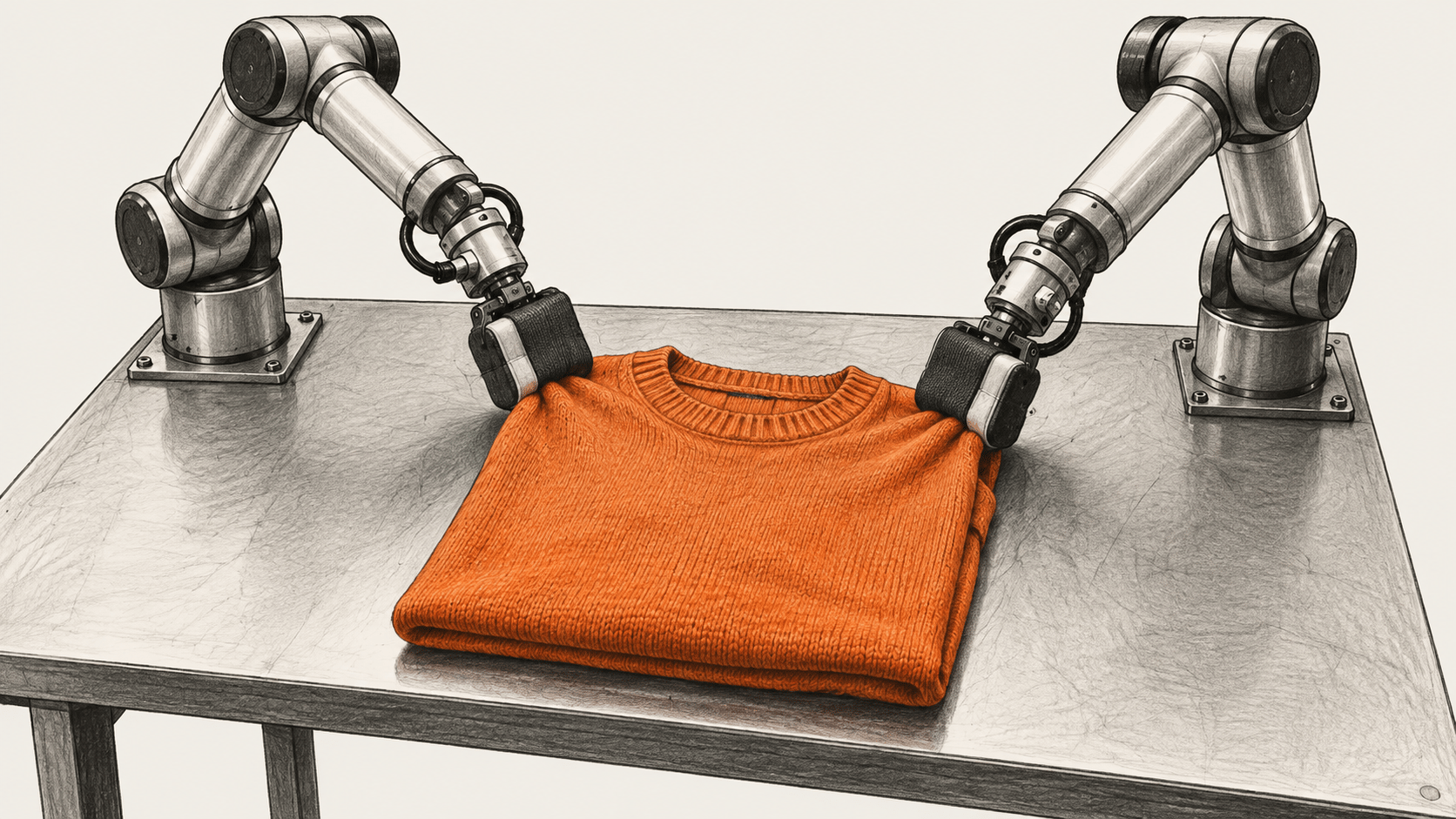
What changed: CEVA reports two live sites using dual-arm robots for fashion returns. In Sereact's proposed workflow, one arm steadies an item while the other changes its orientation for another view. A hidden label or defect can matter to the condition decision. The supplier has not documented that full sequence at the named stations.

Why it matters: CEVA describes employees supervising the robots, handling exceptions and checking quality. The useful measure is how many sorts are accepted alongside the human work needed to finish them. Robot motion alone does not settle the labor or service case.

What to watch: Accepted sorts per staffed hour, intervention frequency, quality outcomes and uptime across varied returns would show how the whole station performs. Fraunhofer IML's fashion-returns fieldwork identifies inspection and repackaging as work around item handling. CEVA and the partners have not published those station figures for the named sites.

Read the full story
—
Back to the briefing
Original story: guide

Move checked ChatGPT context to Gemini, then verify what arrived

Inventory owned ChatGPT instructions, memories, GPTs, Projects, files and chats; use eligible Gemini imports and rebuild selected context, then check each result against the source.

The big change

Capability: Eligible personal accounts can import memory and a ChatGPT chat ZIP into Gemini; Skills and optional Notebooks can hold selected instructions and project context. GPT actions and Project membership need separate rebuilding.

Reader impact: You can preserve an owned source copy, move only authorized material and test each selected item. An import confirmation or fluent answer alone does not establish that the original context survived.

Decision: Check account eligibility and Google's Activity, retention and Notebook storage terms before any upload or paste. Then choose what to import, rebuild, exclude or keep in ChatGPT, and record the result against your own inventory.

Read the full story
—
Back to the briefing
Original story: analysis

Gemini-curated DV360 bundles still leave assignment to buyers

Google's October update promotes Gemini-curated event bundles in DV360 Marketplace, extending a package-curation announcement from March.

The big change

What changed: Google is making its curated inventory more prominent around events where buyers may need to assemble media quickly. Its October post calls the bundles personalized, but does not explain the selection criteria. The update puts an event focus on package curation that Google had already announced in March.

Why it matters: The event theme can help a media buyer find candidates together, while the package choice still calls for judgment about the advertiser's actual campaign. Google has described the offer as personalized, yet its October post gives no criteria that would let a buyer infer fit from that label alone.

What to watch: DV360 limits a line item to 50 packages in total, including those already assigned. Capacity is therefore a concrete constraint when a buyer weighs an event bundle against an established campaign. Other setup and creative decisions remain between inventory assignment and delivery.

Read the full story
—
Back to the briefing
Original story: guide

Research a public topic and make a checked, linked PDF report

Use live OpenAI web search to draft a four-section report, export a complete cited PDF, correct claims locally and approve its exact bytes after human review.

The big change

What changed: The searchable draft, full PDF, source links and response record can travel together. A complete search action and document readback are checked before the PDF is accepted as a draft.

Why it matters: Analysts and small teams can hand someone a report whose cited statements link directly to their sources, then keep a separate record of which claims a person actually checked. The human review is the evidence decision; working links alone do not prove accuracy.

What to watch: A bad claim needs a new local PDF and a new review bound to its hash. The correction step keeps the original search record, so reviewers can distinguish edited prose from new research.

Read the full story
—
Back to the briefing