Michael Smith received an 18-month federal prison sentence on October 6 for a scheme that used automated accounts to stream music and collect royalties. He had pleaded guilty in March to conspiracy to commit wire fraud. AI-generated songs supplied the large catalogue that helped him spread the fake plays across many tracks, according to the U.S. Attorney's Office for the Southern District of New York.
The big change
- What changed: A U.S. court has sentenced a defendant who admitted to a royalty fraud conspiracy built around automated listening. The AI-generated catalogue made the scheme easier to spread across songs; the fraudulent streams were the conduct at its center.
- Why it matters: Streaming counts help allocate royalty pools. As prosecutors describe this case, fabricated plays sent money toward Smith's catalogue that otherwise belonged in those pools for legitimate listening. The agreed loss is a case figure, not a measurement of what any named artist lost.
- What to watch: This case gives platforms and rights holders a concrete distinction to apply when discussing AI music: how a recording was made and whether its plays came from real listeners are separate questions. The sentence establishes the outcome for Smith's admitted conspiracy; it does not measure the scale of fraud across streaming services.
The catalogue and the listeners
Prosecutors say Smith's scheme ran from 2017 through 2024. He created thousands of accounts on music services, used software to keep them streaming songs he controlled, and collected royalties from the resulting plays. At times, as many as 10,000 bot accounts were active at once. The accounts used fake email addresses and fraudulently obtained debit cards, according to the sentencing announcement.
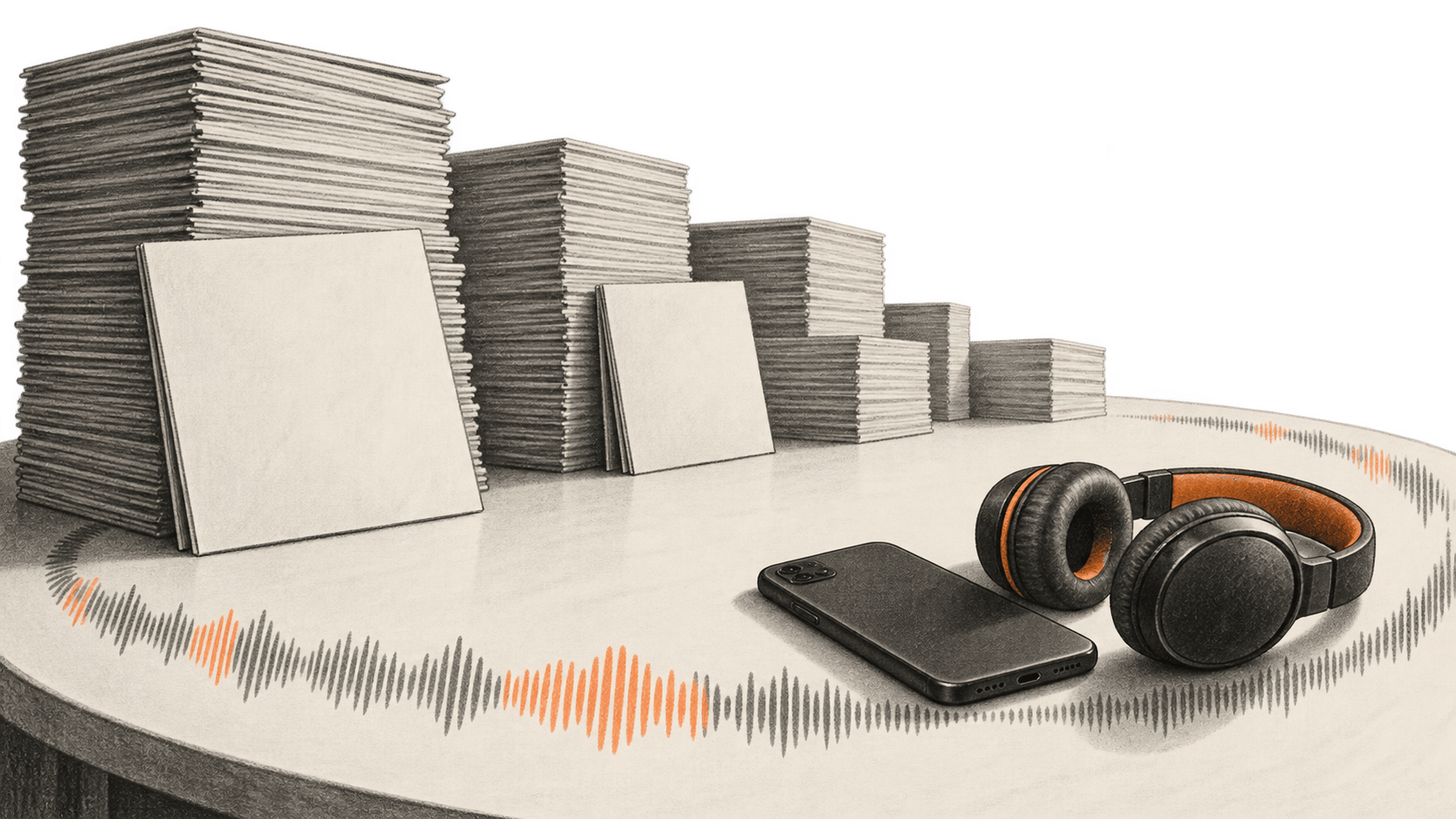
The number of songs mattered because concentrated play counts could draw attention. In an email quoted by prosecutors, Smith said he needed "a TON of songs fast" to get around platforms' anti-fraud policies. Prosecutors say he used AI to create hundreds of thousands of songs, then spread billions of automated streams over that catalogue. His lawyers said in an October 2 court filing that he initially used his own music and turned to AI later. The case therefore spans more than AI-generated tracks.
The mechanism depended on fabricated listening. The prosecution's sentencing letter explains that streaming services generally send royalty funds and play data to rights organizations, which allocate payments to songwriters and other rights holders. Artificial plays can claim a share of those pools. The letter describes the financial mechanism in this prosecution; it is not an independent audit of each service's payments.
Prosecutors offered one striking comparison: in April 2023, Smith's bot accounts generated 80.9 million YouTube Music family-plan streams of his AI-generated songs, against 9.3 million family-plan streams for Taylor Swift's entire catalogue on that service. Those are figures cited in the DOJ release for one service, plan type and month. They do not describe either artist's total listening across the market.
What the sentence and money figure establish
Judge John G. Koeltl also imposed two years of supervised release and ordered Smith to forfeit $8,091,843.64. Prosecutors said he received more than $14 million from royalty-paying entities overall. Their September 29 filing says the agreed approximate loss deducted estimates for genuine streams of his music and for money returned to royalty pools through his purchase of streaming subscriptions. The forfeiture amount is the court's order; it should not be read as a calculation of any individual musician's lost royalties.
The parties argued over what that loss meant at sentencing. Prosecutors said the fraudulent proceeds were diverted to Smith. His lawyers countered in the October 2 response that the agreed loss exceeded what he personally "pocketed" and that no individual recording artist or songwriter suffered an appreciable loss. Neither filing supplies a verified artist-by-artist accounting. Music Business Worldwide's October 7 report also sets out that dispute.
Smith admitted to a wire-fraud conspiracy involving fake listening and royalty payments. His defense filing notes that making and uploading AI music is not inherently unlawful. That distinction matters here: the court punished the admitted fraud, while the AI catalogue was one means of sustaining it. The sentence resolves Smith's case; it does not decide whether other AI-generated songs are lawful or establish how common streaming manipulation is.
Sources & further reading
- U.S. Attorney's Office sentencing announcement, October 6, 2026: the sentence, guilty plea, scheme description and prosecution's streaming figures. These are government case statements, not measurements made by BIG CHANGE.
- U.S. Attorney's Office guilty-plea announcement, March 19, 2026: confirms the single count to which Smith pleaded guilty and the earlier account of the scheme.
- Prosecution sentencing letter, filed September 29, 2026, and defense response, filed October 2, 2026: primary court filings that describe the royalty-pool mechanism and opposing interpretations of the agreed loss.
- Music Business Worldwide, October 7, 2026: independent industry reporting on the sentence and competing sentencing arguments. GIGAZINE, October 8, 2026, also covered the case; its YouTube Music figure differs from the DOJ release, so this article uses the primary record.