A November 20 preprint from Grounded Superintelligence and BitRobot describes RoboCap-10k: about 10,000 curated hours of workplace video with estimated head and hand motion. Dataset access requires manual approval.
The big change
- Six synchronized hat-mounted cameras provide views for reconstructing movement. The authors report calibration and hand-pose tests, but those scores do not establish accuracy throughout every workplace recording or robot-learning gains.
- HOT3D's controlled recordings pair first-person images with motion-capture references. Researchers can compare predicted hands and objects against that reference, with the limits of its lab setup kept explicit.
- Robot learning needs another evaluation step. EgoMimic's laundry experiment tested whether a trained robot completed every fold, separating successful parts of a movement from completion of the whole task.
Read the accuracy numbers carefully
Authors report a median front-stereo calibration error of 0.62 pixels across devices. It checks how image features line up between views, not hand-position error.
The authors report 4.5 mm mean hand error over 21 keypoints on 9.2 held-out minutes, after aligning orientation, position and size. It is not absolute workplace accuracy. Curated footage underrepresents difficult tracking conditions; no touch or force is recorded.
The repository lists CC BY 4.0 and LeRobot-formatted data, but requires approval before authenticated downloads. We inspected its public metadata, not the full corpus.
What a reference benchmark adds
HOT3D's original project describes 833 minutes from 19 participants handling 33 rigid objects. Scenarios resemble kitchens, offices and living rooms, but recordings come from one lab with controlled furniture and varied lighting.
Professional optical motion capture provides hand and object poses, while scanned models describe object shape. The recorded images can therefore be used to ask how closely a tracking method reproduces those reference poses.
Its curated challenge clips also preserve a common comparison unit: five seconds, with 150 frames and annotations for modeled hands and objects. Using shared splits and examples lets researchers compare methods on the same inputs. It does not make those lab examples representative of every workplace.
From a person's motion to a robot's task
EgoMimic's 2024 study combines human first-person and robot demonstrations, aligns their action representations and trains a shared model. It predicts poses for both kinds of data and joint actions for the robot.
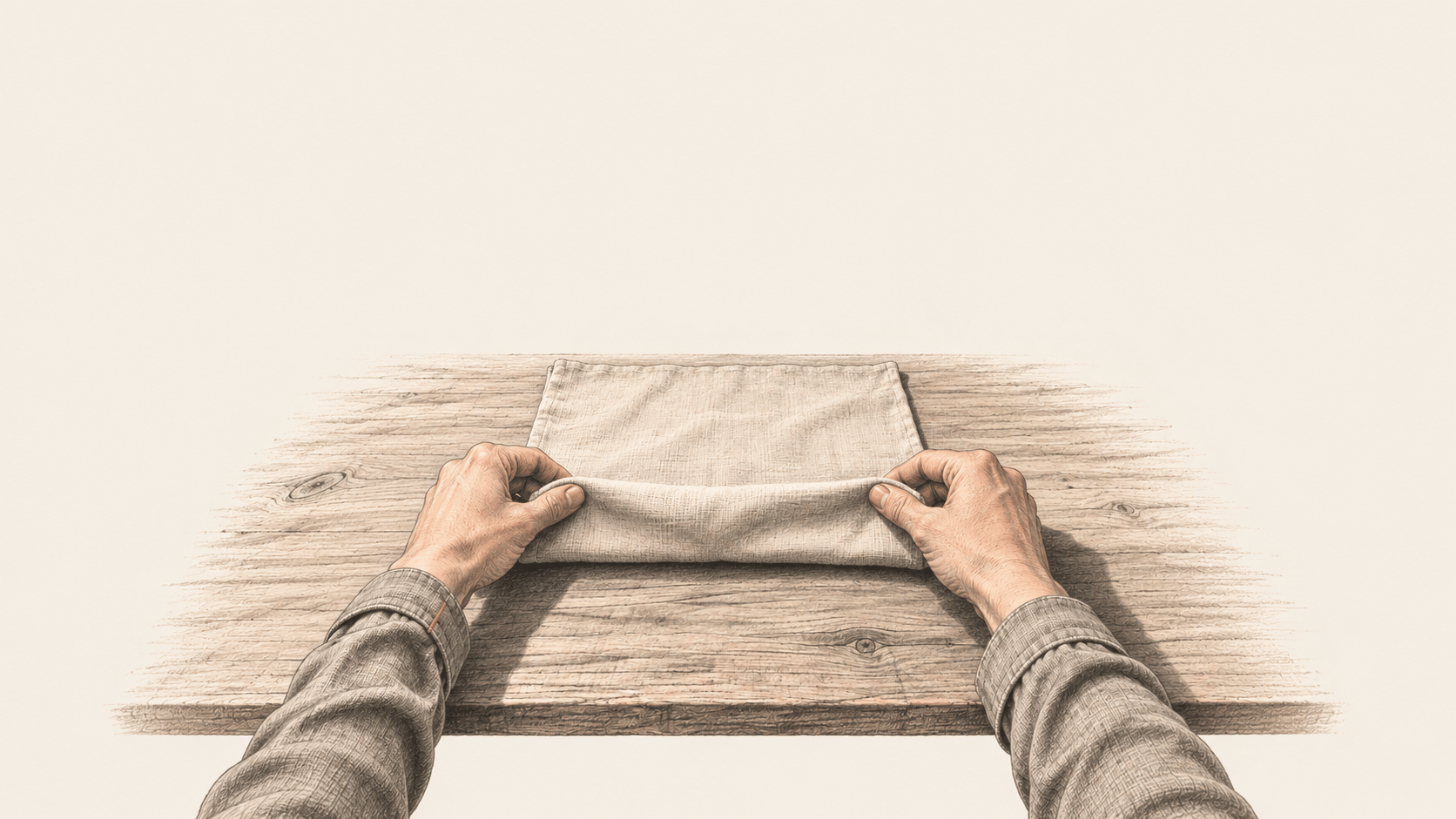
In its laundry experiment, the robot had to fold one sleeve, the other sleeve and then the shirt in half. The protocol specifies 40 evaluation rollouts across eight shirt-and-position combinations. They scored stages separately and defined success as completing all stages, so partial progress did not count as a completed job.
These trials test learned control on a defined task; they do not establish performance across other jobs.
A usable format still needs usable labels
Hugging Face's LeRobot v3 documentation explains how a collection can be organized for training. Videos are stored in camera-specific files, numeric signals in Parquet tables, and metadata describes frame rates, features and episode boundaries.
An episode is therefore a logical stretch of activity rather than necessarily a separate video file. Metadata connects its boundaries to rows and video offsets, allowing a loader to assemble the observations belonging to that episode.
This organization can make large collections easier to read without first copying the entire archive. Streaming fetches portions during use. It changes when data moves and how much must be held locally; it does not turn a storage format into a test of annotation quality.
For a robotics team, the useful sequence is to understand what each stored field represents, inspect the reference evaluation, and test the resulting controller on the intended task. The recording, the inferred motion and the robot's eventual behavior are three different pieces of evidence.