THE WORLD IS NOT STANDING STILL.RSS
BIG CHANGE.
BIG CHANGE, one tap away

Make room for the big picture.

Add BIG CHANGE to your home screen or desktop. It opens in its own window, with the latest stories when you’re online.

iPhone & iPad
Open bigchange.ai in Safari. Tap Share, then Add to Home Screen. Turn on Open as Web App if shown, then tap Add.
Android
Open bigchange.ai in Chrome. In the browser menu, choose Install app or Add to Home screen.
Desktop
In Chrome or Edge, use the install icon in the address bar or the browser’s app menu. In Safari on Mac, choose File → Add to Dock.
All briefings

Follow the change ·

The day,
in perspective.

What happened in AI and robotics — and the change behind it. A reading path through 19 stories from BIG CHANGE.

Ordered using RADAR attention, story opens and likes. Excerpts from our published reporting; open a story for the full context and sources. Dates in UTC.

Original story: news

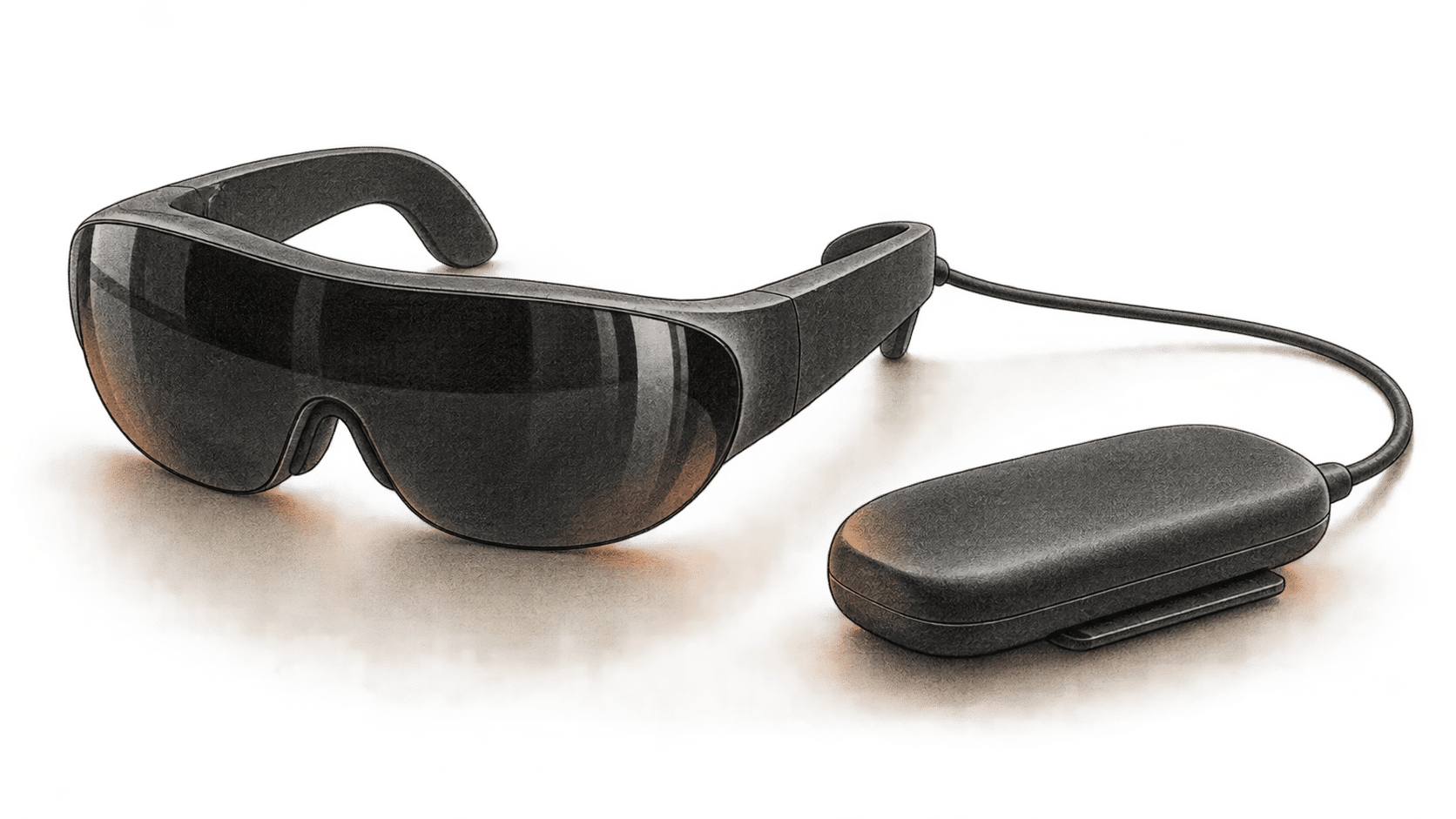
Meta announces VR Glasses with an integrated AI agent for spring 2027

Meta's VR Glasses put an AI assistant into a glasses-style VR system with a tethered computer. Brief demos show the controls; sales are planned for spring 2027 at $1,299.99 USD.

The big change

What changed: Meta is putting its AI assistant inside the controls of a VR device. The company says people can use voice, gaze and hand gestures to open apps, play media and arrange screens without controllers.

Why it matters: The glasses combine an assistant with a private display for work and entertainment. That gives the AI a direct role in navigating the device, while the people considering it still need to judge the complete system: glasses, tethered computer, apps and available content.

What to watch: The spring 2027 release will show whether Meta delivers the announced AI controls and partner services together. Regional access, subscriptions and the experience beyond supervised demos remain relevant to a purchase decision.

Read the full story
—
Back to the briefing
Original story: news

Meta adds camera-free Ray-Ban Meta Audio alongside camera-equipped Gen 3

Meta's $349 Ray-Ban Audio glasses are open for preorder and omit the camera. Its $449 Gen 3 is available now with camera-based AI; Muse integration remains forthcoming.

The big change

What changed: Meta now offers voice AI in Ray-Ban frames without a camera. Buyers can choose audio interaction separately from the photo, video and visual AI functions of Gen 3.

Why it matters: The hardware choice gives buyers and organizations setting rules for shared spaces a concrete distinction: Audio cannot capture the surrounding scene, but microphones, a phone, an app and an account remain part of using it.

What to watch: Audio is a preorder shipping October 13, while Gen 3 is available now. Muse integration has no announced glasses release date, so it remains a separate software promise from either hardware purchase.

Read the full story
—
Back to the briefing
Original story: analysis

Repeated patterns distort stereo depth in vehicle tests

A UF-led study traces stereo-depth errors to camera sampling and calibration. Controlled vehicle tests show false obstacle perception; a proposed defense reduces errors on limited image sets.

The big change

What changed: The researchers connect ambiguity in repeated visual patterns to measurable camera artifacts, then show depth errors in conventional stereo matching and learned models. Replacing a matching algorithm with AI did not remove the weakness in the systems tested.

Why it matters: Distance estimates feed obstacle detection. In these experiments, a van beside the driving path could produce a perceived obstacle within it. That makes the reliability of the depth estimate relevant to the vehicle's next decision.

What to watch: The proposed defense checks the matching process for repetition. Its promising results cover limited image sets; reliability across other cameras, models and operating conditions remains the practical question for adoption.

Read the full story
—
Back to the briefing
Original story: news

Meta introduces AI game-making tools for Horizon, with access still limited

Meta says Horizon Create and Horizon Studio can make and edit 2D or 3D mobile games for distribution across its platforms. The tools remain in limited testing, with access and earning terms unresolved.

The big change

What changed: Meta now describes a prompt-led workflow for complete 2D and 3D mobile games, spanning a phone app and a web editor. It previously offered AI tools for particular parts of Horizon worlds, including meshes, textures and scripts, and previewed Horizon Studio in 2025.

How it works: Meta says its Horizon Engine can turn descriptions into environments, characters, mechanics and multiplayer support. Creators can play a generated build, request changes or edit parts of it in Studio. Projects and their iteration history transfer between the two tools.

Why it matters: Publishing through either tool makes a game eligible for native discovery on Facebook, Instagram and Horizon. That combines the proposed creation workflow with Meta's existing audience, while distribution and reach still depend on Meta's review and discovery systems.

Read the full story
—
Back to the briefing
Original story: analysis

Jev demos show where AI decisions fit inside everyday software

Eight Jev demos show how a typed AI decision can rank, select or filter within an existing app. We trace what the surrounding software still does and what remains untested.

The big change

What changed: Builders are inserting a typed AI judgment into existing software interactions, from a browser shortcut to an inbox view. Jev returns a choice, score or probability; the application supplies the candidate material and acts on the answer.

Why it matters: A useful decision can be made at the moment someone is reading, searching or sorting, without handing the whole task to a chat interface. The same design gives application owners responsibility for wrong rankings, hidden content and unintended actions.

What to watch: The next evidence is task specific: whether these tools select the right passage, preserve essential page controls, rank important mail well and handle uncertain cases across ordinary use. A fast demonstration alone cannot settle those questions.

Read the full story
—
Back to the briefing
Original story: news

Meta says Muse can now operate Mac apps with permission

Meta says Muse for Mac can operate apps with user permission. The Mac download is available, while the precise desktop permission scope and glasses integration remain unverified or forthcoming.

The big change

What changed: Meta is extending Muse from websites and connected services into Mac desktop apps. The new access depends on user permission.

Why it matters: The download page names files, Messages, Calendar and Notes as sources Muse can draw on. For Mac users, granting access therefore means deciding which personal context and app actions to delegate to the agent.

What to watch: That decision turns on the desktop controls Meta provides. Its published connected-service controls distinguish reading email from sending it; the checked Mac materials do not yet establish whether desktop access can be restricted to individual apps.

Read the full story
—
Back to the briefing
Original story: news

ANYmal passes access-controlled doors in Whitegate inspection pilot

At Ireland's Whitegate power plant, an ANYmal inspection robot used a digital credential to pass controlled doors during a several-week pilot. Commercial availability and measured outcomes remain unreported.

The big change

What changed: In one plant pilot, an inspection robot crossed a controlled door by presenting a credential to the site's access system. The system checked its permission and operated the door, so the route could continue without someone opening it.

Why it matters: A robot's navigation alone cannot get it through a restricted area. This integration lets plant staff govern a robot's access through the permissions already used for people, according to the partners, while leaving the access decision with the plant's system.

What to watch: The partners are developing the controlled-door feature as a commercial ANYmal add-on. Its terms, supported doors and operating requirements have yet to be published; the Whitegate pilot establishes a working integration at one site.

Read the full story
—
Back to the briefing
Original story: news

Senate hearing examines Flock camera searches and oversight

A September 23 Senate hearing examined Flock's searchable plate-camera network, a wrongful arrest and competing oversight proposals. The hearing changed no law.

The big change

What changed: Senators put the uses and safeguards of a large, searchable vehicle camera network on the public record. Cameras record a car at a place and time; software can combine those records across locations to reconstruct travel.

Why it matters: The evidence a camera supplies can influence an investigation, while searches of stored records can reveal movements far beyond a single traffic stop. Lindsey Isaacs's testimony shows the cost of treating one camera sighting as stronger evidence than it was.

What to watch: Congress has competing proposals before it, from a warrant requirement for older location records to a federal funding ban on police use of plate readers. Neither proposal became law at this hearing. Local officials can also examine their own access, sharing, retention and audit rules.

Read the full story
—
Back to the briefing