Samsung and SK hynix are both shipping HBM4, the latest generation of high-bandwidth memory used alongside advanced AI processors. They are also extending relationships with Nvidia and OpenAI. The public announcements establish product and partnership milestones, but disclose little about how much memory each customer will buy from either supplier.
Rest of World's September 28 reporting describes the South Korean companies' competition for U.S. AI customers. The more useful distinction for buyers and observers is between having a product ready, shipping it, and winning a specified share of a customer's future systems. Those are different milestones, and most of the customer-level numbers remain private.
The big change
- What changed: Both companies now report commercial HBM4 shipments. Samsung says it began mass production and customer shipments in February 2026; SK hynix says mass shipments began in the second quarter.
- How it matters: HBM supplies data to processors at high speed, so its availability is one part of building AI accelerators at scale. Customer qualification, packaging and production capacity still affect how much can be supplied.
- What remains unknown: The announcements do not establish Nvidia's or OpenAI's allocations between suppliers, the quantity delivered to either customer, or a reliable HBM4 market-share outcome.
Two shipment milestones, different disclosures
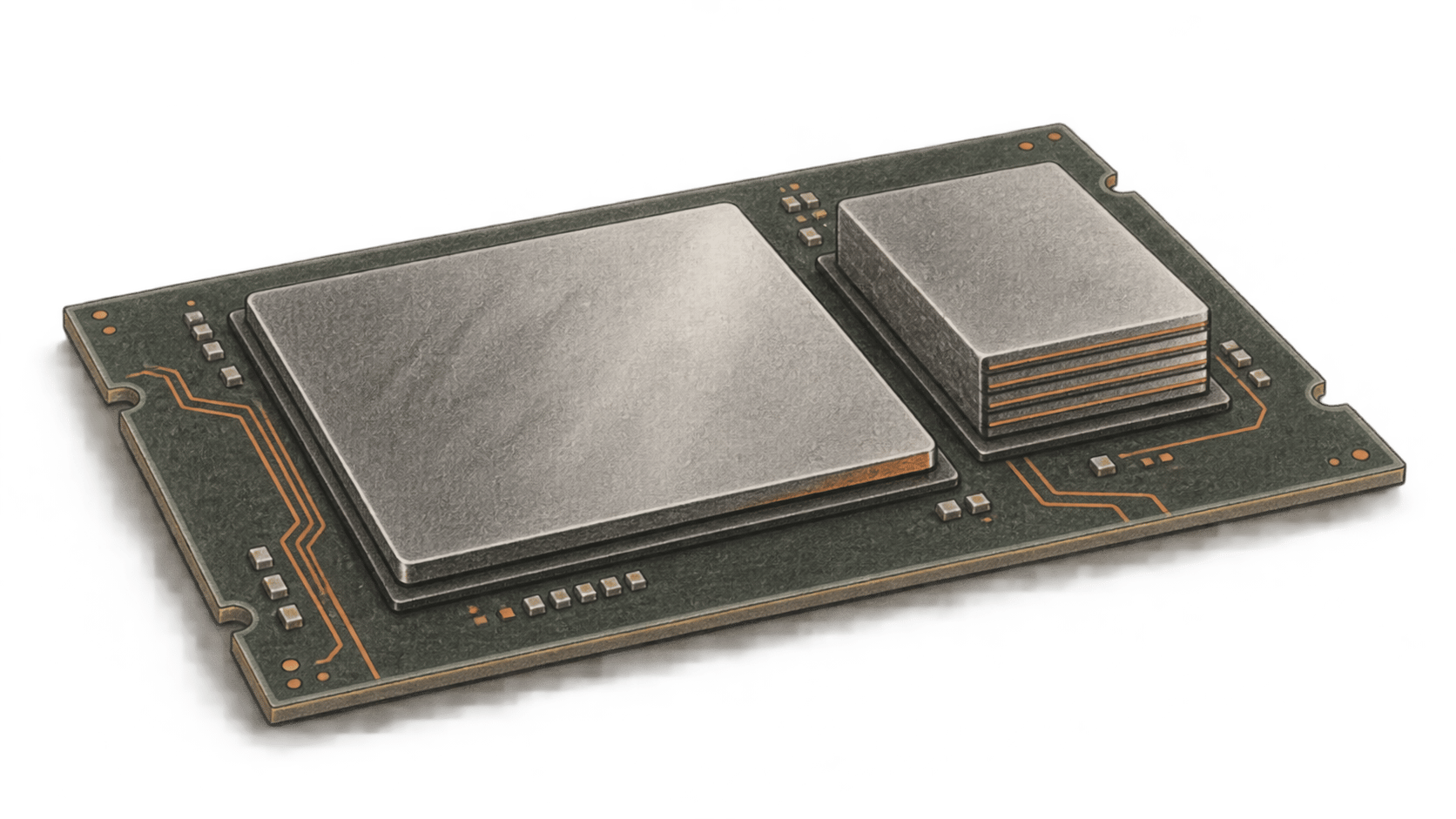
High-bandwidth memory, or HBM, stacks dynamic random-access memory chips vertically to move data at high bandwidth. It sits close to a processor in an accelerator package, helping feed the calculations used in AI training and inference. More memory bandwidth can ease a data bottleneck; it does not, by itself, determine the performance or cost of a complete AI system.
SK hynix said in September 2025 that it had completed HBM4 development and prepared a mass-production system. That was a readiness announcement, not a statement that mass customer shipments had begun. In its July 2026 second-quarter results, the company said HBM4 mass shipments started during that quarter and that it intended to increase production in the second half. It did not give customer-specific HBM4 volumes in that release.
Samsung said on February 12 that HBM4 mass production had begun and commercial products had shipped to customers. Its release did not name those customers or quantify their purchases. In a March announcement for Nvidia's GTC conference, Samsung described its HBM4 as designed for Nvidia's Vera Rubin platform. That design claim is more specific than a general partnership, but it is not a disclosed Rubin supplier allocation. Samsung also said it would display HBM4E, the following generation, at GTC. The announcement did not claim commercial HBM4E shipments.
The companies' U.S. projects are at different stages too. SK hynix broke ground on an Indiana advanced-packaging facility on August 27 and says it expects HBM mass production there in the second half of 2029. Its plan is to make wafers in Korea, then package and test them in Indiana. Groundbreaking adds a potential future production route, not present U.S. output.
Partnerships are not purchase ledgers
In October 2025, OpenAI announced partnerships with both Samsung and SK under its Stargate initiative. It said the companies plan to expand advanced-memory production toward 900,000 DRAM wafer starts per month. The announcement gives no timetable for reaching that target, no division between the suppliers, and no conversion from wafer starts into shipped HBM stacks for OpenAI. It also describes proposed Korean data-center work. The number should not be presented as current HBM capacity or an OpenAI purchase order.
Nvidia and Samsung's October 2025 AI-factory announcement describes a planned Samsung manufacturing system using more than 50,000 Nvidia GPUs. It also refers to collaboration on HBM3E and HBM4. Buying GPUs for Samsung's own factory and supplying memory for Nvidia's accelerators are separate commercial relationships. Neither the factory plan nor the statement of collaboration specifies Nvidia's HBM procurement mix. Samsung's March 2026 memorandum with AMD says the companies will align on primary HBM4 supply for AMD's MI455X; that is a stated supply plan, not a disclosed delivery total.
The companies are competing for places in customers' chip designs and for manufacturing commitments. Christopher Miller, a semiconductor historian interviewed by Rest of World, told the outlet that technology leadership is now assessed alongside capacity. His assessment explains why shipment capability matters, but offers no customer allocation.
The competition also runs through export policy. In August 2025, the U.S. Bureau of Industry and Security announced the removal of a license-free authorization for specified foreign-owned semiconductor fabs in China. Its rule names Samsung China Semiconductor and SK hynix Semiconductor (China). BIS gave former participants 120 days after the rule's Federal Register publication to seek licenses. It said it intended to license operation of existing fabs, while not intending to license capacity expansion or technology upgrades. That changes the equipment-approval route for those facilities; it does not prove a cut in HBM shipments to U.S. customers. Rest of World's account adds interviews about the strategic pressure on the Korean companies, but their future China exposure and customer mix are still uncertain.
For now, each firm says it is shipping HBM4, both have named AI-industry relationships, and SK hynix has begun building a U.S. packaging site. The next evidence to look for is qualified supply and actual purchases by each accelerator maker. Public partnership statements leave those quantities undisclosed.
Sources & further reading
- Rest of World, Ananya Bhattacharya, September 28, 2026 — original interviews with analysts about the Korean suppliers' rivalry and China exposure. Its market-share assertions are not adopted here as independently verified measurements.
- Samsung's HBM4 shipment announcement, February 12, 2026 and SK hynix's second-quarter results, July 29, 2026 — each company's account of its HBM4 shipment stage. Neither provides a customer-by-customer volume table.
- OpenAI's Samsung and SK partnership announcement, October 1, 2025 — the source of the 900,000-DRAM-wafer-start target. It presents a production plan, without a supplier split or delivered HBM total.
- Nvidia and Samsung's AI-factory announcement, October 30, 2025 and Samsung's GTC product announcement, March 17, 2026 — explain the two companies' manufacturing and HBM collaboration; neither discloses Nvidia's supplier allocation.
- SK hynix's Indiana facility announcement, August 28, 2026 and the U.S. export-control announcement, August 29, 2025 — establish the planned construction timetable and the licensing transition, respectively. Neither establishes present U.S. HBM output or a customer shipment loss.