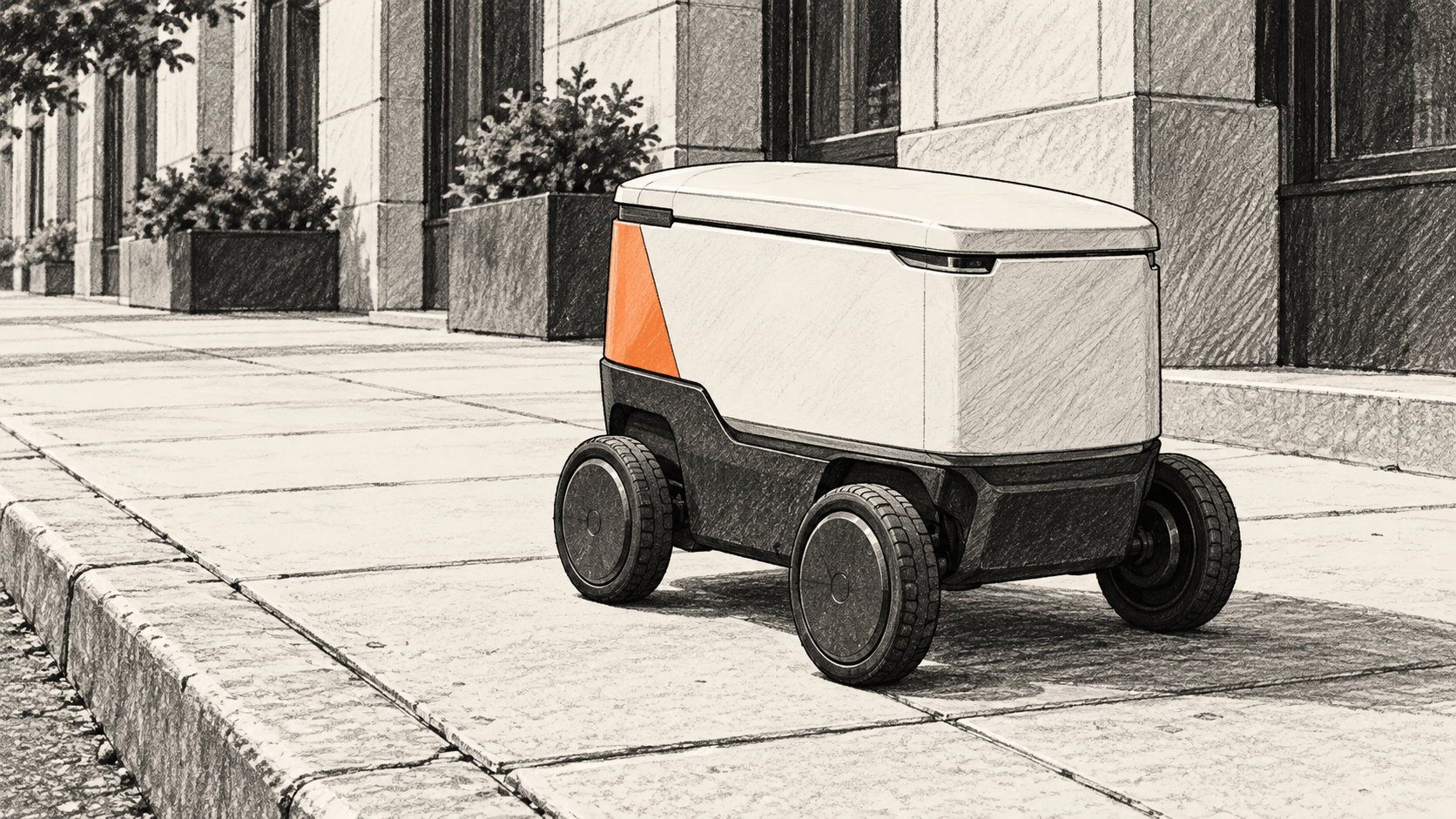
Carolyn Marvin stood in the path of an Uber Eats delivery robot on a Center City Philadelphia sidewalk on October 14. Police arrested her after she refused officers’ instructions to move, according to two local reports. Marvin says she was protesting the use of robots for work done by human couriers. The encounter puts two separate questions in view: why police intervened that day, and what Pennsylvania requires of companies allowed to operate delivery devices on public routes.
The big change
- What changed: Avride is authorized to run delivery robots in Philadelphia in partnership with Uber Eats. Pennsylvania’s Phase 2 rules allow autonomous or remote movement, while requiring remote monitoring and the ability to take control when necessary. Robot delivery on a public route is a supervised commercial operation.
- Why it matters: Sidewalk users and delivery workers now encounter that operation in shared public space. The state requires devices to yield to pedestrians in pedestrian areas; the arrest has drawn attention to how a protest against the service meets an active delivery route.
- What to watch: Marvin says she will contest the disorderly conduct citation. Any court outcome would address her case. PennDOT’s operator authorization establishes the framework for the robots, but the public material reviewed does not show how the device or a remote operator responded during this encounter.
What happened on Filbert Street
Philadelphia police told WPVI that officers responded to a reported disturbance involving Marvin and an Uber delivery robot on the 1200 block of Filbert Street, near Reading Terminal Market. Police said she repeatedly blocked its path and ignored multiple orders to move. WPVI described an arrest and disorderly conduct charge; PhillyVoice, which also spoke with police, reported that officers issued a criminal violation notice for disorderly conduct. KYW Newsradio reported on October 18 that Marvin had been released with a citation.
Marvin told the outlets she stands in front of delivery robots to protest what she believes is the displacement of human delivery workers. She argues that her conduct is protected public protest and told PhillyVoice she plans to contest the citation. Those are her views and intended legal response, not a finding about employment effects or the lawfulness of this incident. The reporting reviewed for this article establishes no final court outcome.
What Pennsylvania permits operators to do
PennDOT’s current personal delivery device page lists Avride, in partnership with Uber Eats, as a Phase 2 operator authorized in Philadelphia on September 23, 2026. It also lists Pinkbot as a separate Phase 2 operator in the city. An Uber Eats robot in the local reporting fits the partnership PennDOT names, though the reports do not establish the individual device’s operating record.
Pennsylvania defines a personal delivery device as a ground-based goods carrier whose driving system allows autonomous and/or remote operation. PennDOT says these devices are classified as pedestrians under the vehicle code, but they must yield to all pedestrians and cyclists in pedestrian areas. The state permits them in pedestrian areas, including sidewalks, subject to its operating conditions.
Phase 2 permits autonomous or remote driving without Phase 1’s requirement that an operator remain within 30 feet of the device and maintain line of sight. It still requires remote monitoring and, when necessary, remote control or override. Avride describes its delivery robot as autonomous and says it uses self-driving technology adapted to pedestrian-path travel. That is a company description of the product. Neither it nor the state authorization tells us whether a remote operator intervened on Filbert Street, what the robot detected, or whether it met every requirement during the confrontation.
The arrest concerned Marvin’s alleged refusal to follow police instructions, according to the police account reported locally. The state’s delivery-device rules describe the operator’s duties. Neither set of facts, on its own, settles Marvin’s claim about her right to protest or measures the effect of robot deliveries on courier jobs.
Sources & further reading
- WPVI’s October 16 report gives the police account of the Filbert Street response and Marvin’s stated reason for blocking robots.
- PhillyVoice’s October 16 interview dates the arrest, reports police’s description of the violation notice and records Marvin’s intention to contest it.
- KYW Newsradio’s October 18 report reports that Marvin was released with a citation and still intended to fight it.
- PennDOT’s personal delivery device guidance and operator list, updated September 29, sets out the current Philadelphia authorizations, pedestrian priority and Phase 2 oversight requirements.
- Avride’s product page describes its robot’s claimed autonomous navigation. It does not document this incident’s sensor or operator record.