Lumentum's chief executive says the company's capacity for optical components is committed through early 2029. In a Bloomberg interview in Tokyo on October 9, Michael Hurlston said Lumentum could not meet about 70% of demand for some products through 2027 and about 30% for other products through 2028. Those are his estimates for different parts of Lumentum's business, not measurements of the entire optics market.
The distinction matters because the parts connect computing equipment. Lumentum makes lasers and optical modules used to carry data across fiber links in AI data centers. Demand for those links rises as operators connect more accelerators and switches. Hurlston's account points to a capacity constraint at one supplier, but neither the interview nor the public product information identifies a delayed customer project.
The big change
- What changed: Hurlston now says Lumentum's optical-component capacity is sold out into early 2029. Bloomberg reported that six months earlier he expected capacity to sell out through 2028.
- Why it matters: Optical parts are one input to the high-bandwidth connections between AI servers and network switches. Buyers planning those networks need to know whether the specific components they have qualified can be supplied on their schedules.
- What remains unknown: Lumentum has not publicly identified the affected product quantities, customers or projects in the interview. Its figures do not establish an industry-wide shortage or a measured delay to AI data-center construction.
Where the optical parts go
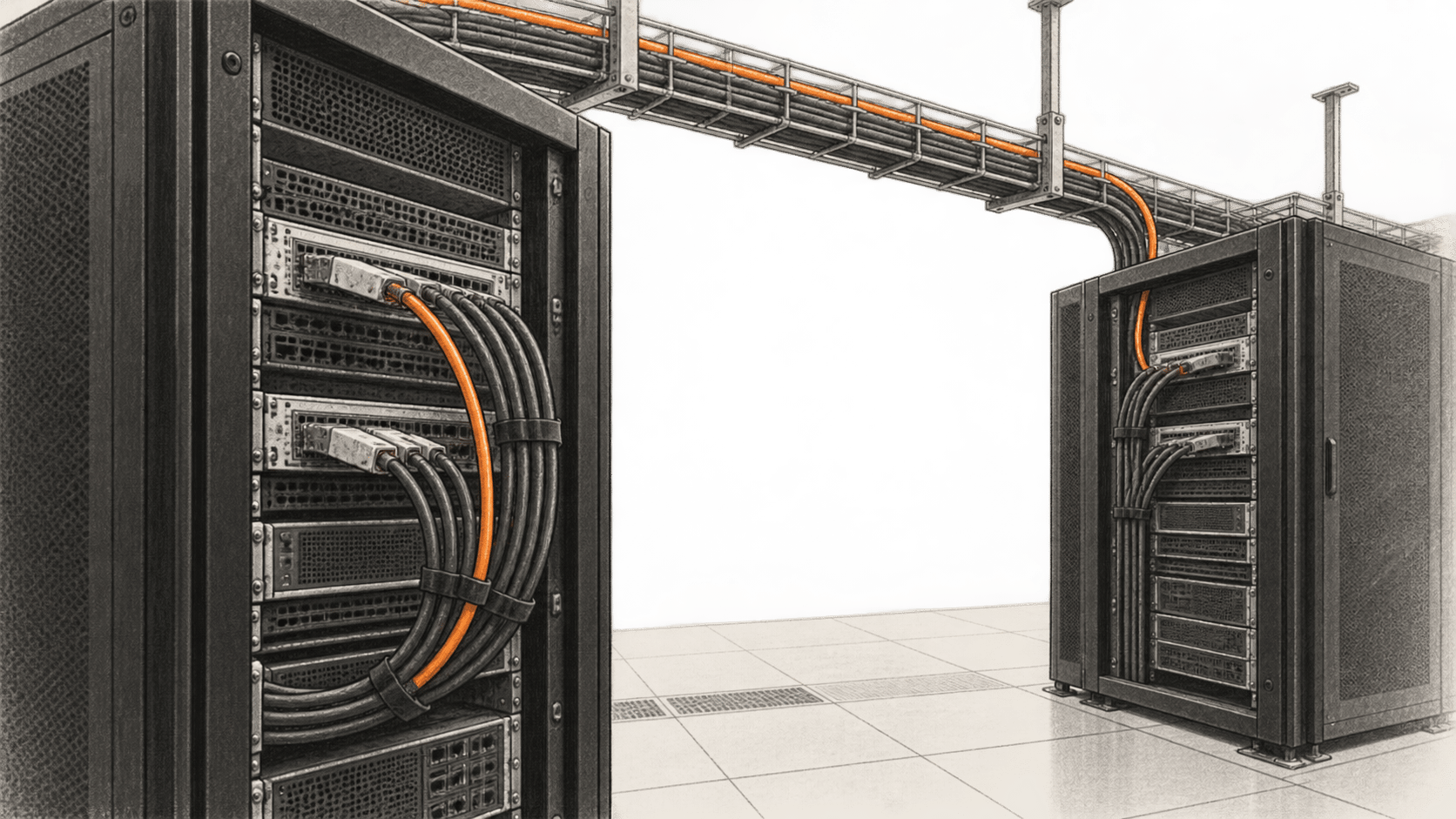
An optical transceiver turns electrical signals into light for transmission over fiber and converts incoming light back into electrical signals. Lumentum's datacom product page describes 800-gigabit and 1.6-terabit modules for links within and between racks and network switches. Its April product account also describes laser components used in different 1.6-terabit module designs. That product range makes “optical components” broader than a single interchangeable part.
Nvidia describes optical transceivers, cables and co-packaged optics as options for connections among servers, switches and storage in its AI networking systems. The design and reach of a particular link determine which part fits. A laser, a finished module and a co-packaged optical engine occupy different places in that system. Lumentum's reported unmet demand therefore cannot be converted into a count of missing AI servers or data centers from the information disclosed.
This is a different supply question from high-bandwidth memory. Our earlier report on Samsung and SK hynix examined memory supplied alongside AI processors. Lumentum's account concerns components that move data across the network connecting computing equipment. A project can need both, but the public evidence here does not say which buyers lack either one.
Capacity plans and their limits
Lumentum announced in March that it planned to retrofit a Greensboro, North Carolina, facility to make indium phosphide optical devices, including continuous-wave and ultra-high-power lasers. It expected production to ramp in mid-2028. The announcement names Nvidia as a customer of the facility. A planned ramp is evidence of how Lumentum intends to add capacity; it gives no verified output from that site today and no measure of how much of Hurlston's reported unmet demand it will cover.
Bloomberg's interview establishes what the CEO says about orders and available capacity at Lumentum. It does not disclose contracts, a product-by-product supply table or the schedules of customers building AI data centers. The next useful evidence would be reported production volumes and customer delivery information for the affected parts. Until then, the precise conclusion is that one optical supplier says its capacity is heavily committed for years ahead.
Sources & further reading
- Bloomberg's October 9 interview report and the Bloomberg interview video listing. The report supplies Hurlston's capacity claim and the two distinct unmet-demand estimates. The video listing corroborates the interview subject and timing; it does not provide a transcript of the percentages.
- Lumentum's datacom transceivers and April 2026 optical infrastructure account. Company descriptions of where its modules and lasers fit. They do not establish customer delivery outcomes.
- Nvidia's interconnect product explanation. A system supplier's account of the roles of transceivers, cables and co-packaged optics in AI networks, not independent evidence of Lumentum's backlog.
- Lumentum's Greensboro facility announcement. The source for the planned mid-2028 production ramp and Nvidia customer relationship; the plan is not current output.